A coffee with: Carlos Arango
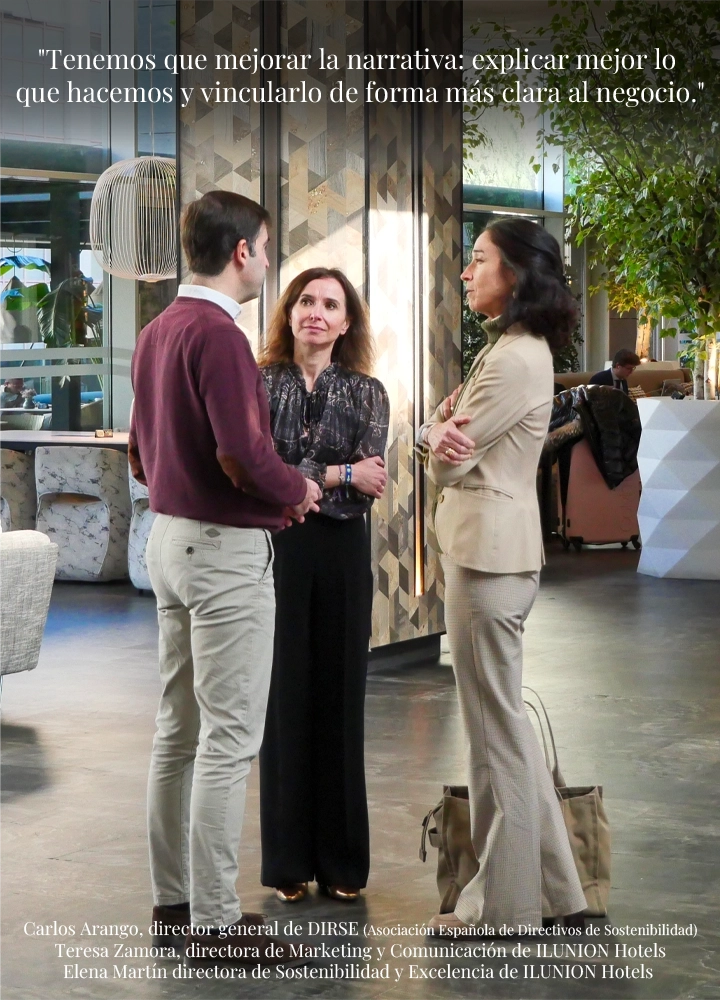
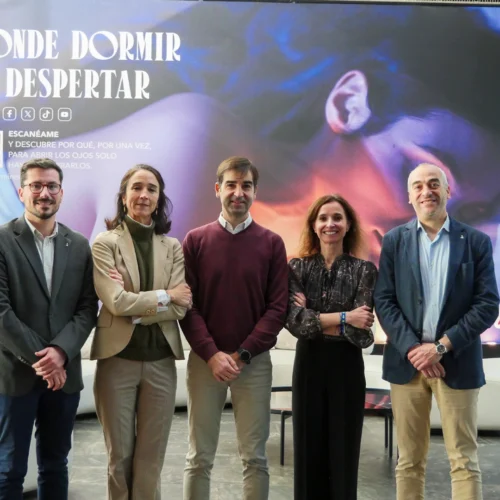
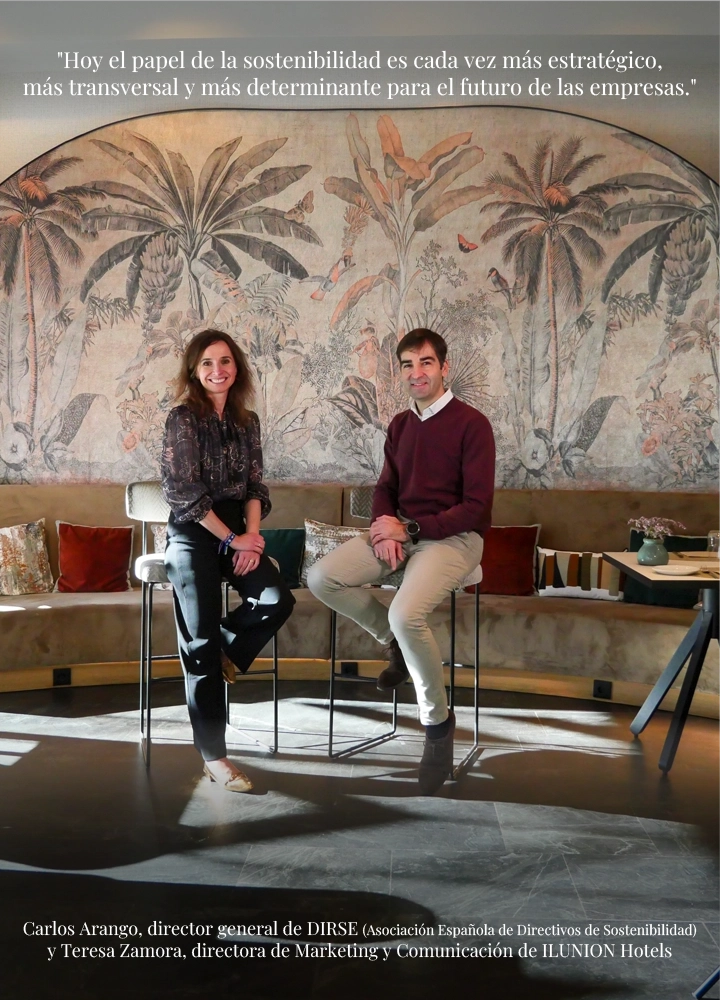
Carlos Arango, General Manager of DIRSE (Spanish Association of Sustainability Executives)
Interview by Teresa Zamora.
January 27, 2026
For years, sustainability was seen as a complement within organizations. Something important, yes, but relegated to the background. Today, however, its role is increasingly strategic, transversal, and decisive for the future of companies.
Carlos Arango, General Manager of DIRSE (Spanish Association of Sustainability Executives), has experienced this evolution firsthand—from within the profession and through an association that, in just over a decade, has helped consolidate the role of those working to integrate sustainability into decision-making.
We spoke with him about the growth of DIRSE, the creation of professional awareness, the ethical challenges facing the sector, and the increasingly urgent need to better explain what sustainability is and why our lives depend on it.

DIRSE has grown significantly in recent years. From your point of view, what would you say has been the association’s most transformative activity during this time?
It is true that DIRSE has experienced enormous growth. We now have more than a thousand members, with territorial delegations throughout Spain, and we have grown in a very balanced way across our four lines of activity: training, resources, advocacy, and networking.
But if I had to point out what has been truly transformative during these twelve years, I would say it is having responded to one of our main objectives: the defense of the professional and the profession. We have managed to create a collective consciousness, a way of understanding that sustainability is a profession with its own identity and is increasingly relevant and strategic within organizations.
DIRSE is also characterized by its ability to build community. What recent achievement makes you feel most proud in terms of impact?
One of the aspects I like most about DIRSE is that we talk a lot about creating shared value, because in our case, it truly happens. A large part of our value proposition is not developed solely by the management team, but by the members themselves.
A good example is the toolkits—practical sustainability guides containing real cases that we develop together with our corporate partners, who contribute very valuable knowledge and experience.
This also happens with the training sessions and webinars, which are usually taught by the members themselves from their area of expertise. And the same goes for the Panel of Experts, a group of professionals who volunteer to provide knowledge when we develop positioning statements, papers, or technical documents.
Ultimately, it is this collective consciousness that allows us to generate impact both inside and outside of DIRSE.
You recently presented the profession’s Code of Ethics. What was the biggest challenge in defining what it means to act with integrity in a role so exposed to pressure?
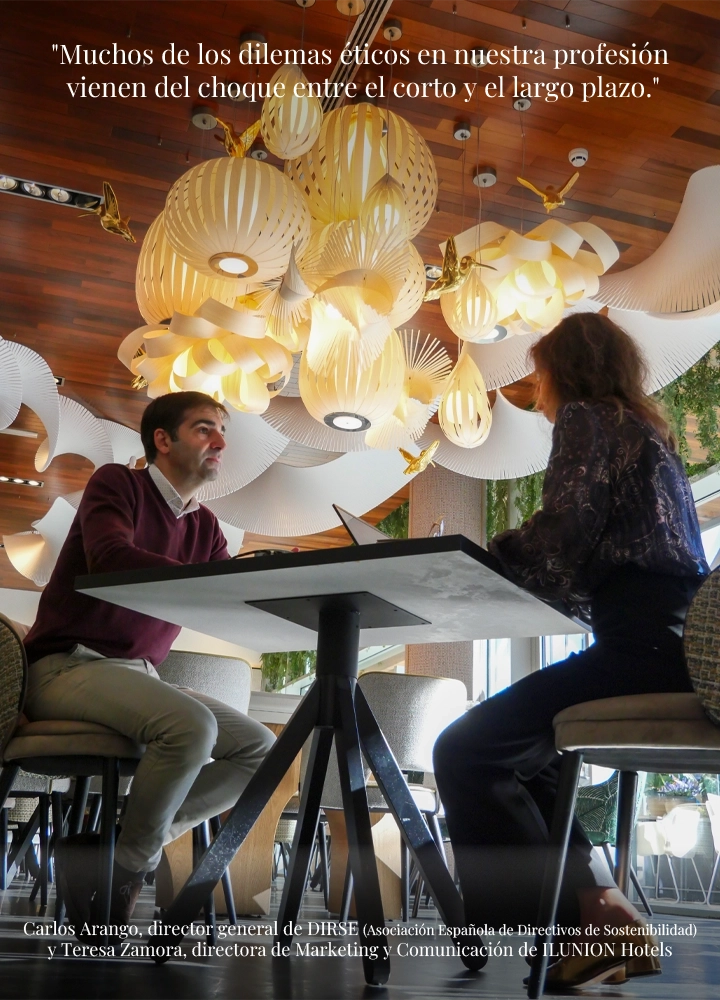
I believe that many of the ethical dilemmas in our profession stem from the clash between the short and long term. Pressures are often linked to immediate results, while sustainability works with different timelines and different ways of generating impact.
Precisely for this reason, the code of ethics was born with a very clear vocation: to be a document for the entire profession, not just for DIRSE. That is why we developed it alongside other entities in the sector and ethics experts.
We are very proud of how it has been received, but now we have a major challenge ahead, which is the rollout: training, communicating well, and ensuring that professionals adhere to it and integrate it into their daily practice.
Looking back, is there a moment in your career that marked a turning point in your understanding of sustainability?
At the beginning, I approached sustainability from a perspective more linked to social impact or philanthropy. This was quite common years ago.
But it was through my involvement in DIRSE, contact with other colleagues in the profession, and also thanks to my mentor, Javier Garilleti, that I began to understand the strategic nature that sustainability could have.
That was when I became aware that, when well-designed and aligned with business objectives, it can become a truly differentiating element for companies.
From your experience, which personality traits have most influenced your leadership style?
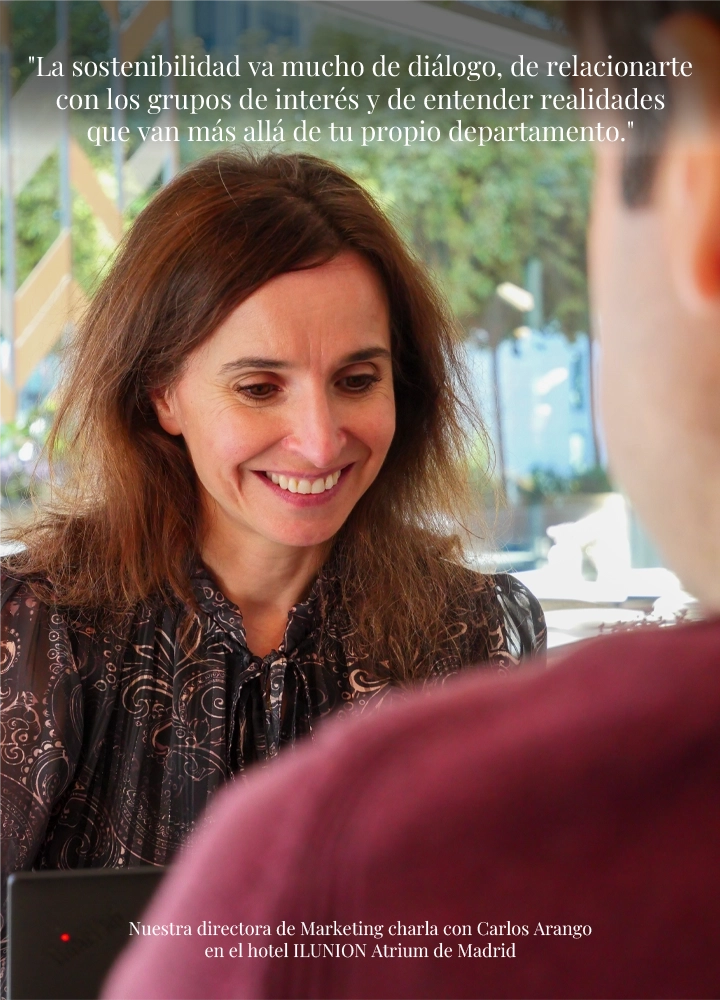
I believe that empathy and the ability to listen are fundamental in this profession. Sustainability is very much about dialogue, about relating to stakeholders, and understanding realities that go beyond your own department.
And, without a doubt, another key competency is resilience. The ability to adapt to change and manage uncertainty, especially in a regulatory and social context that is constantly changing.
What misconceptions do you still encounter regarding sustainability professionals?
There is still a perception that we don’t work much, that we focus on “do-goodism,” or that sustainability doesn’t sell. In some cases, it is even wrongly associated with a certain ideology.
But sustainability is not about that. It is about business, investment, the future, growth, and risk management. It is not something foreign to the business; it is an essential part of it.
Looking ahead to the coming years, what competencies do you believe will be key for sustainability leaders?
The capacity for dialogue and influence is fundamental. Sustainability is a very transversal field, and one must know how to navigate the organization, influence the steering committee, and speak the same language as the business or financial areas.
We need to improve the narrative: explain what we do better and link it more clearly to the business. And, of course, have a strategic vision and a deep understanding of how the business works.
When you need to recharge your energy, what inspires you the most?
My family, without a doubt. It is my priority. Also my friends and time shared with the people I love.
Sports play an important role, especially cycling. And I have a very personal curiosity for geography, languages, and linguistics. I am very interested in how we speak and how we care for our language.
If you had to summarize your current vision of sustainability in a single word, what would it be?
I could speak of opportunity and the future, but also of uncertainty and misunderstanding. There is still a way to go before what it is and what it is for is fully understood.
But I am clear that our lives depend on it. And we also have to improve the narrative: explain what we do better and link it more clearly to the business.