A coffee with: Miguel Sanz
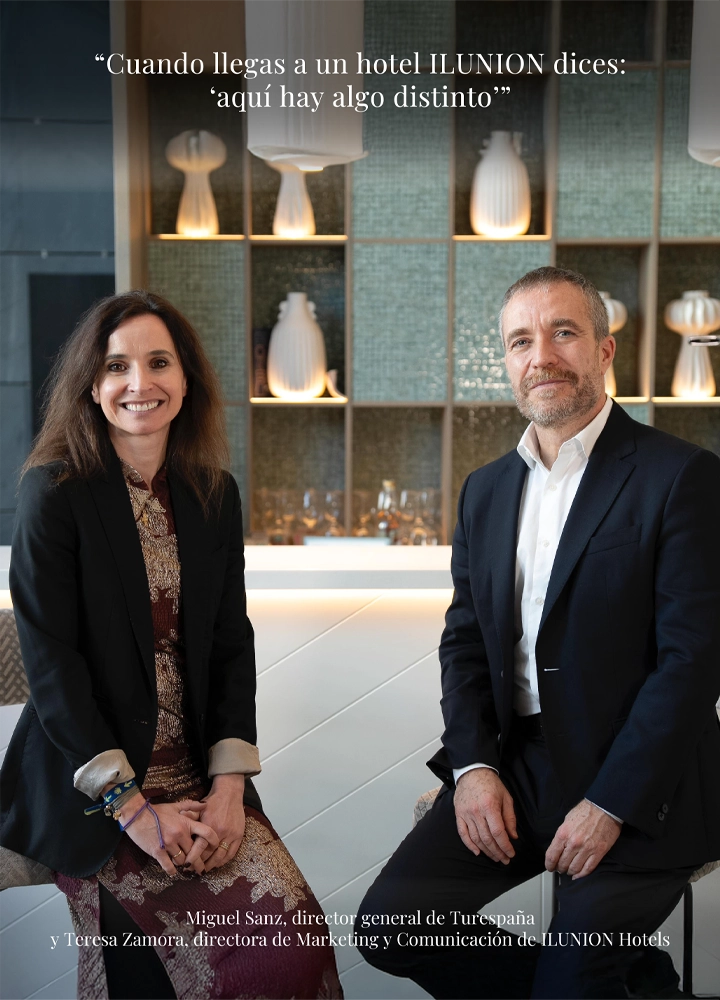
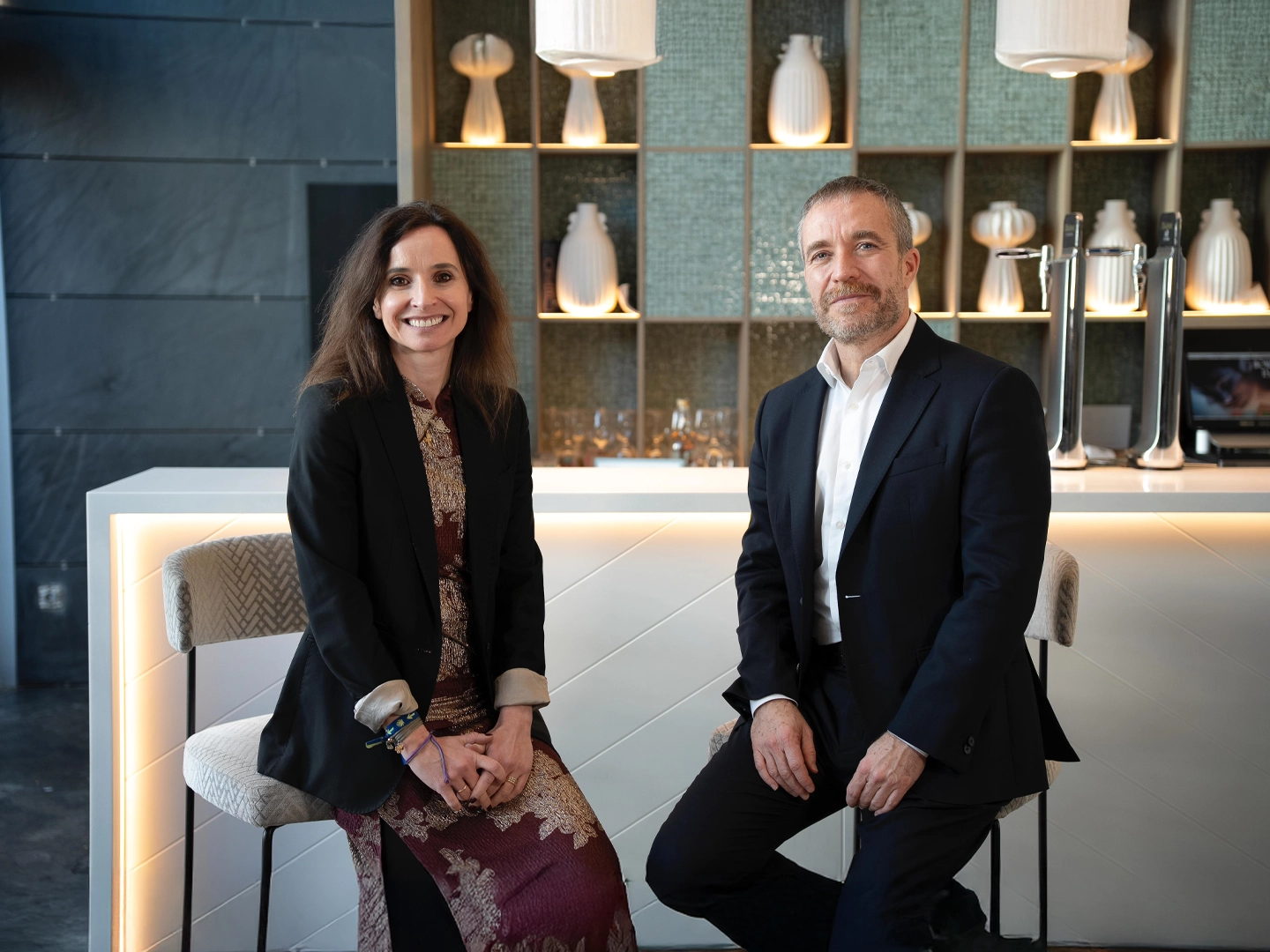
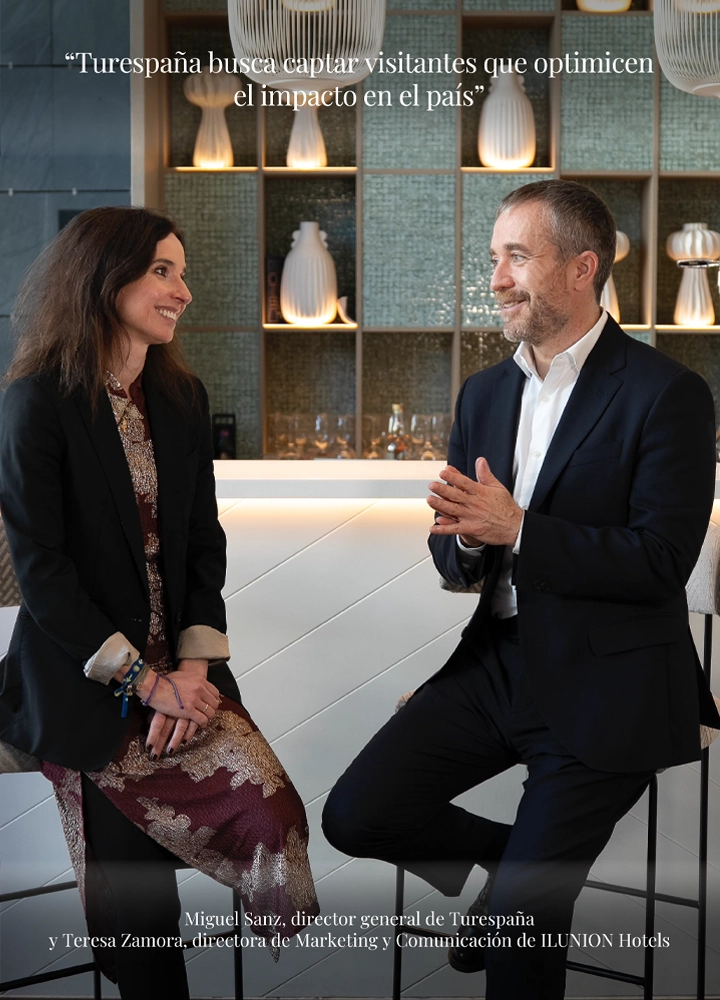
Miguel Sanz, Director General of Turespaña
Interview with Miguel Sanz, by Teresa Zamora.
February 25, 2026
For years, Turespaña has been associated with promoting Spain as a destination. But Miguel Sanz himself insists that this concept is no longer enough. Today, he explains, the challenge is not just to attract visitors, but to manage the impact of international tourism so that it is socially productive, environmentally sustainable, and economically profitable.
In this conversation, he reviews the organization’s evolution, the opening to long-haul markets, the digital leap, the need to measure the satisfaction of both visitors and residents, his vision on artificial intelligence, and also personal lessons that connect directly with the spirit of Overcoming the Impossible.
How would you explain what Turespaña is and what its role is within the tourism ecosystem?
Turespaña is an agency under the Ministry of Industry and Tourism of the Government of Spain. It was created nearly 41 years ago as the successor to a century-long tradition of tourism promotion in Spain, which began with the Royal Commissioner for Tourism, founded in 1928.
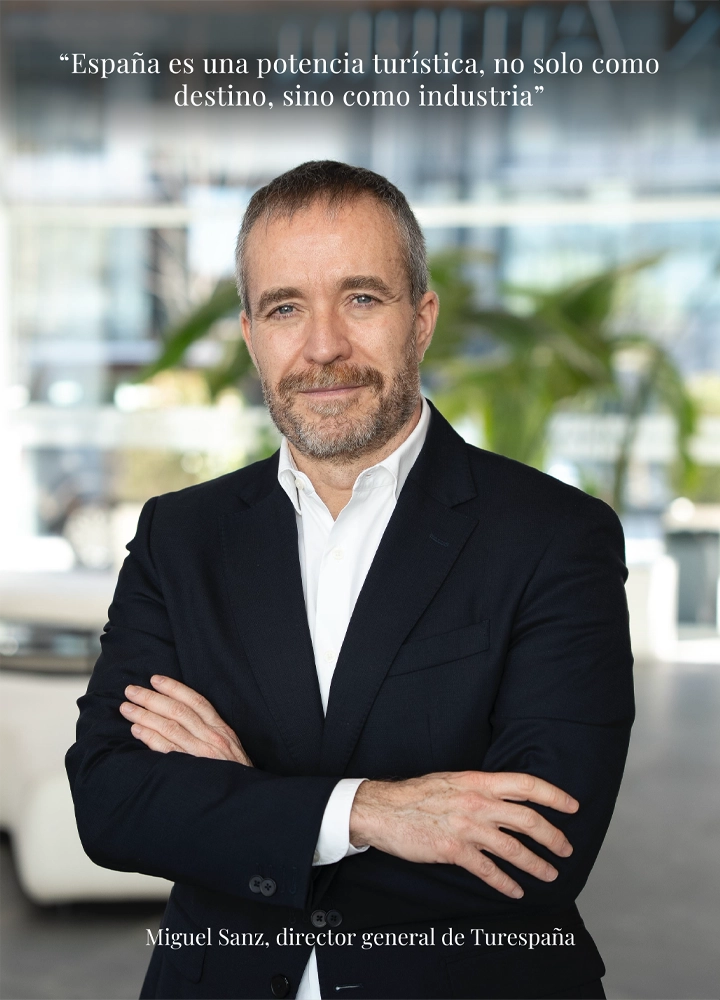
But today, it can no longer be said that we simply “promote Spain.” Not only that. What we do is manage —or try to manage— international demand flows. To what end? To optimize the impact of tourism: maximizing positive externalities and reducing negative ones. Furthermore, we aim to contribute not only to economic development but also to social and environmental progress, helping to accelerate national processes such as the ecological transition. Tourism, as a part of society, also has to do its homework.
I like to summarize it like this: we are the coordinators of the internationalization of tourism in Spain. We work with tourism companies and destinations (autonomous communities, cities, regions, provinces) so that tourism has a positive impact from an economic, social, and environmental point of view.
It is a total shift in concept: it is no longer about “promoting,” but about managing impact.
Exactly. It’s not about attracting visitors just for the sake of it. It’s about attracting visitors who optimize the impact on the country.
In the past, for example, a high value was placed on the international tourist who came to Madrid and spent 30,000 euros on shopping in three days. That was the “premium” profile. And perhaps less consideration was given to a family spending a week in Extremadura and spending 5,000, 6,000, or 7,000 euros.
Economically, in macro terms, the shopping tourist may have a very visible impact. But socially, the multiplier effect of a family traveling to a territory—staying, consuming, and distributing their spending—is very significant. It’s not better or worse: it’s different.
What we try to do is manage a demand mix that allows for the greatest possible development, both socially and economically.
Ultimately, we have gone through stages: first, bringing in tourists regardless of who they were; then focusing on those who spent the most; and now, talking about tourists with an optimal impact on the territory. For example, in destinations with a heavy tourist load in the summer, attracting more tourists during those months may have a less positive social and environmental impact. In those cases, the goal is to attract tourists at other times of the year and promote experiences that stabilize and boost the local economy, diversifying spending and generating more employment.
How does that translate into day-to-day operations? What do you look for when deciding which type of visitor is best?
It is about analyzing territories and needs. And, with those analyses, seeking out visitors who, due to their travel habits or the experiences they choose, have a greater and better impact.
I always use a simple example: three tourists coming for one day is not the same as one tourist coming for three days. In terms of “tourist days,” it’s the same, but the impact is not equal. Three one-day tourists tend to concentrate on the same things; someone who stays for three days diversifies more: museums, neighborhoods, activities… and distributes their footprint more effectively.
We also know that certain profiles—such as families traveling from European markets—tend to show higher loyalty, better knowledge of the destination, and, at times, less impact on certain variables.
Turespaña turned 40 in 2025. Which milestones would you highlight in its evolution and in the way tourism is promoted?
One of the most relevant milestones has been the opening of long-haul markets. Spain was heavily concentrated on major European markets. In these 40 years, it has opened up to Asia: today we have two offices in China, one in Singapore, and one in Mumbai (India). Asia is the great emerging market.
The expansion into North America was also consolidated, with four offices in the United States: New York, Miami, Chicago, and Los Angeles. This diversification has contributed to Spain becoming a global destination.
Another major milestone is digitalization. In the 1990s, Spain.info was born, a major portal for promoting Spain and one of the first in the world. This digitalization has continued to this day, as we are already working with artificial intelligence and digital platforms.
And there is a structural milestone: the adaptation to the territorial model. The Constitution establishes that tourism competencies belong exclusively to the autonomous communities, except for one shared responsibility: international promotion. This requires an effort of integration and coordination, because the internationalization of Spanish tourism involves the State, the communities, the municipalities, and companies.
Furthermore, in recent years we have promoted a very visible event: the Turespaña Convention, a meeting to coordinate the international action of Spanish tourism, with one-on-one meetings between tourism counselors abroad and the sector, ending with debates and networking on issues that affect us all.
Spain is a world leader in tourism competitiveness. What makes us so influential?
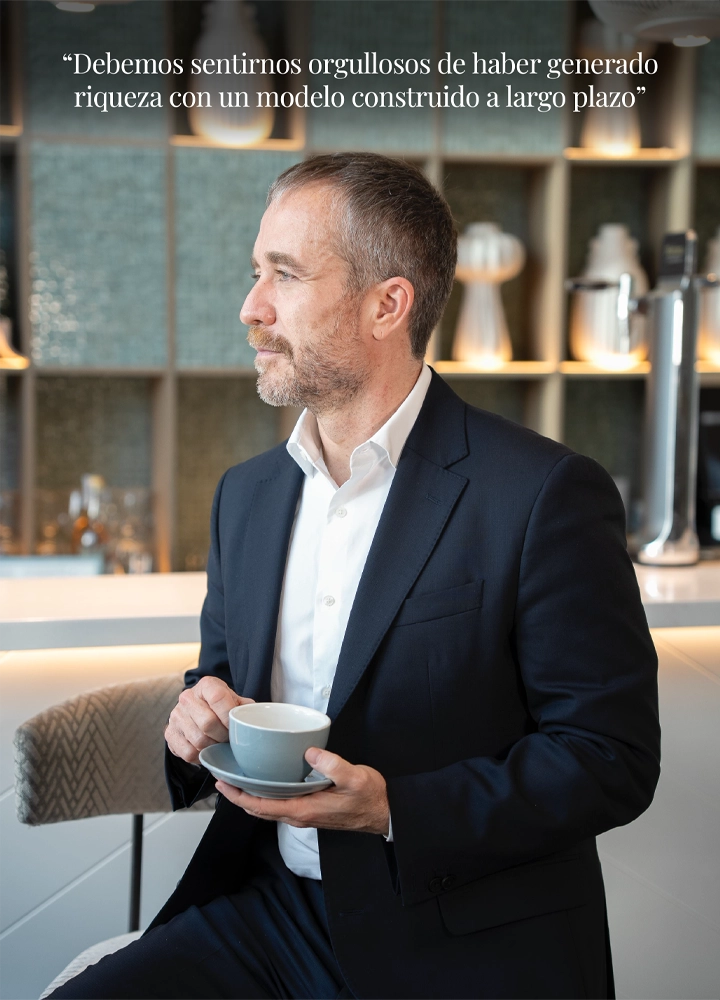
Spain is a tourism powerhouse, not only as a destination but as an industry. And we should be proud of that.
We have produced some of the largest hotel companies in the world, as well as very important tourism management and technology firms (for example, companies like Amadeus). Likewise, we have built a world-class airport network with a single operator.
In terms of connectivity, Spain is the third most connected country in the world, following the United States and the United Kingdom. In fact, the air corridor with the most seats in the world is the one between the UK and Spain. Furthermore, Spain has around 35 international airports; Italy, for example, has 15.
In other words, Spain is not just about climate and coastline. We have succeeded in building a tourism industry from the public sector—airport networks, roads, high-speed rail, on-site services—and from the private sector, with leading hotel, technology, and airline companies.
That is why we are a benchmark. And although tourism has negative externalities that must be managed, we should feel proud of having generated wealth through a model built for the long term.
In your repositioning strategy, what exactly are you looking for?
We aspire to be a destination that welcomes any type of person, whoever they are and wherever they come from. And we want the tourism model to ensure that the impact is socially productive, environmentally sustainable, and economically profitable.
In the “You think you know Spain. Think again” campaign, for example, it is the first time it rains in a Turespaña campaign. It seems minor, but it means that destinations where it rains regularly were excluded from the tourist imagery, and they are no less incredible for that reason.
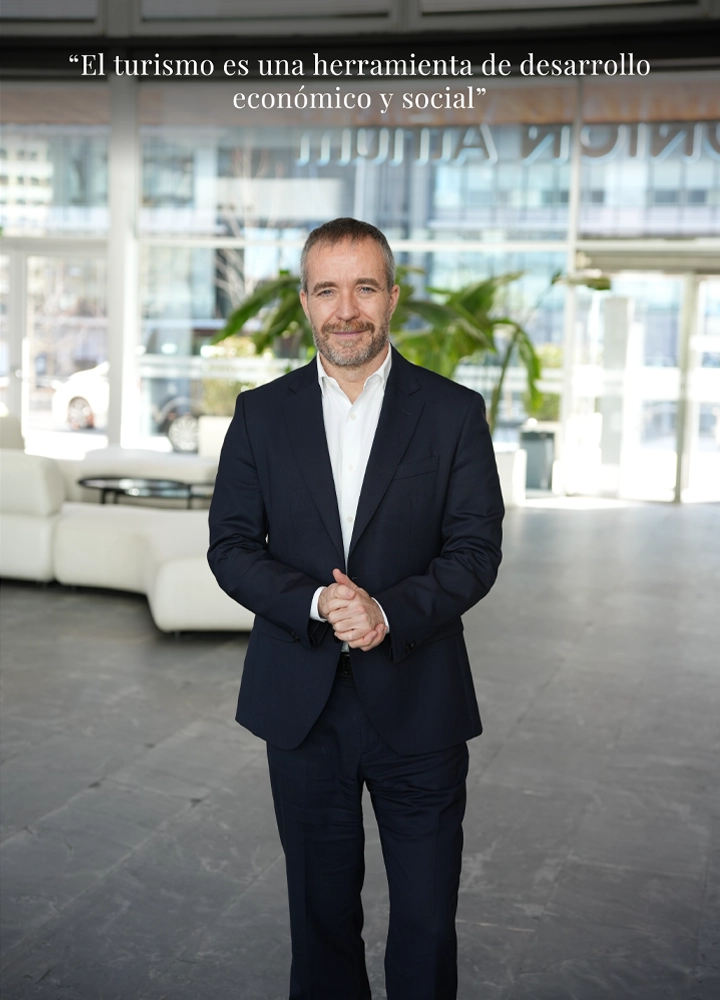
Introducing other elements into the perception of Spain expands tourism as a tool for economic and social development.
What new tools would you highlight to improve the tourism model?
For me, a major milestone is starting to create measurement tools.
Five years ago, we began conducting an international visitor satisfaction survey. I asked myself: how is it possible that all tourism companies have satisfaction surveys and we, as a country, do not know if our visitors were satisfied or not, or what the probability of them returning is?
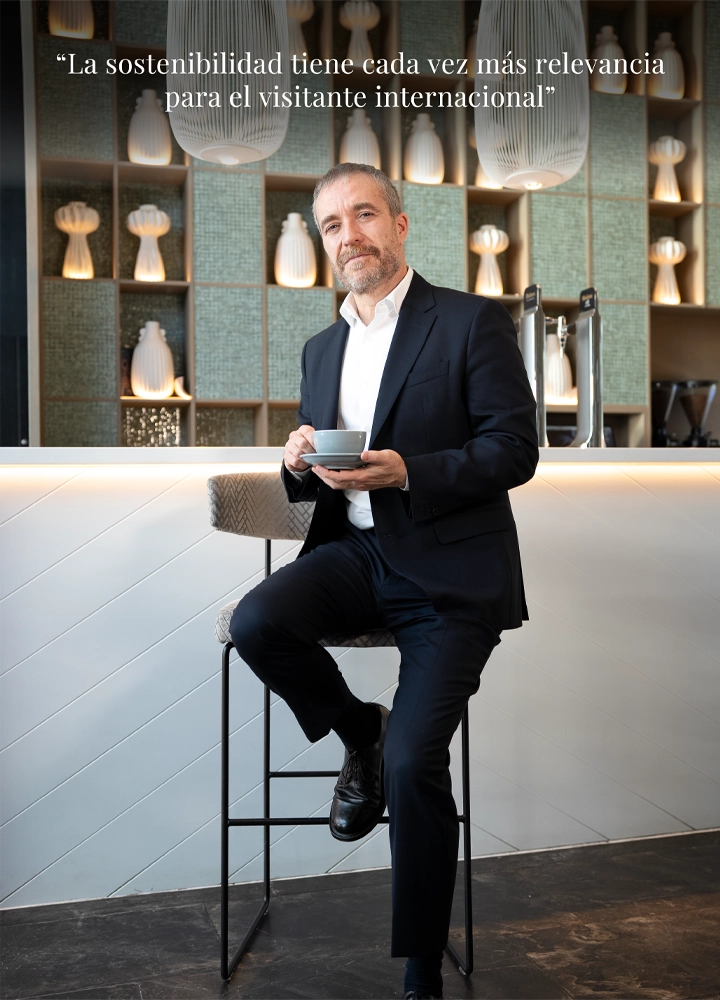
General satisfaction is very high, but there is one dimension where satisfaction is lower: sustainability. This tells you where more work is needed, and furthermore, it is increasingly relevant for international visitors.
Likewise, we have asked Spaniards, the residents, how tourism impacts them. There is a social dialogue regarding the impact of tourism because we need data to understand the situation and its evolution. The idea is to update these surveys year after year to improve the tools of the Government, the private sector, and other public actors.
In 2023, you assumed the presidency of the European Travel Commission. How do you interpret this election and how does it strengthen Spain’s presence in Europe?
I interpret it as a recognition of Spain’s relevance. Candidates from Italy and Croatia stood, and my election has to do with the fact that Spain is seen in Europe as a major tourism powerhouse, in both the public and private sectors.
During my presidency, we are trying to improve the influence of the European Travel Commission within the European Commission’s new portfolio for Sustainable Transport and Tourism, so that tourism gains greater relevance on the European political agenda, where it had been significantly sidelined.
We also want to serve as a meeting point between the European public sector (national tourism agencies), the European Commission (with which we have a stable relationship), and the private sector. There are not many stable forums for meeting, despite tourism being one of our major industries.
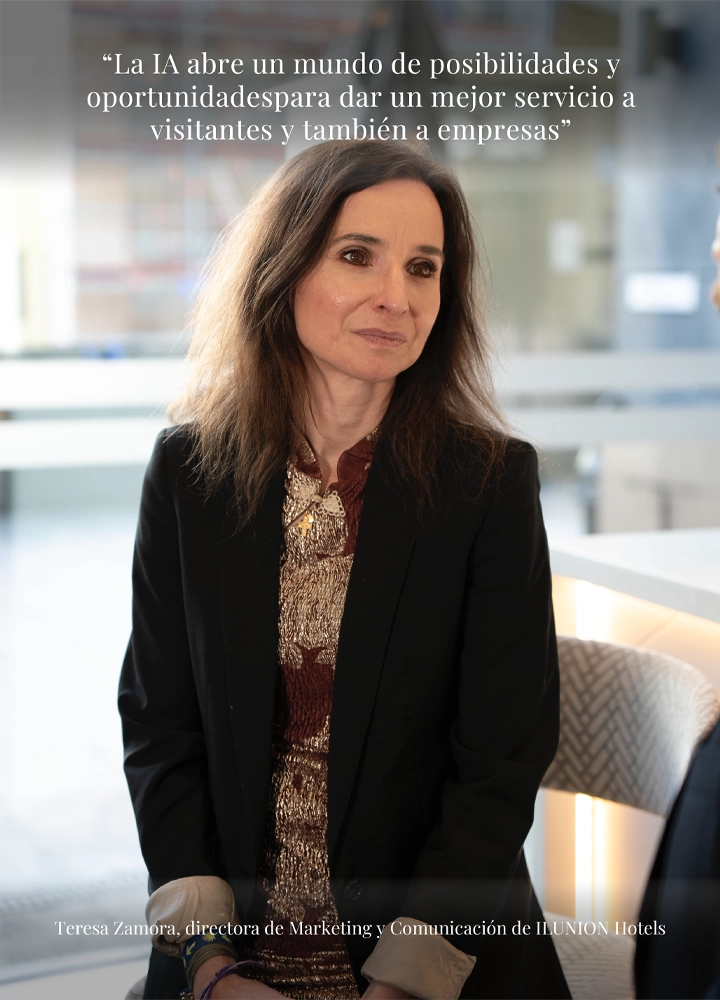
What role does artificial intelligence play in the transformation of the tourism promotion model?
This is like when the Internet appeared, but multiplied by ten.
Artificial intelligence has two spheres of impact. An internal one: how it optimizes the management of organizations (administrative processes, internal management, information we provide abroad, etc.). And an external one: how tourists around the world find inspiration, choose, purchase, and enjoy their trips.
For us, the sphere of inspiration is especially relevant, as that is where Turespaña operates. Previously, we did this through campaigns, Spain.info, or website collaborations. Now, websites are ceding part of their prominence to AI tools, and we have to calibrate how we influence the recommendations that AI makes about Spain: what it recommends, how, why, and using which sources.
Then there is commercialization: how the traveler buys and how AI is integrated into the sale of products and experiences. And at the destination, for example, regarding flow management: diversifying, informing about congestion, improving the visitor experience… it is a world of possibilities and opportunities to provide better service to both visitors and companies.
If you had to choose one keyword that will transform the industry in the coming years, what would it be?
Artificial intelligence, without a doubt. To levels beyond our imagination. In ten or fifteen years, we will see how the world has changed and how differently everything is done.
The Internet changed the world and accelerated it. Artificial intelligence multiplies those effects tenfold: it will be a faster, more instantaneous, and more automated world. And there will be social debates about how it will coexist with the current social model.
On a different note: you travel for both tourism and work. Which destinations inspire you?
For work, to be honest, very few, because I’m in and out. Usually, I see a hotel and little else.
In my private life, I am inspired by authentic destinations, where your experience is different from life in your own country and challenges you to get to know new cultures. Also, destinations with a good tourism offering—not just sun and beach, but authentic quality experiences: gastronomy, accommodation, activities.
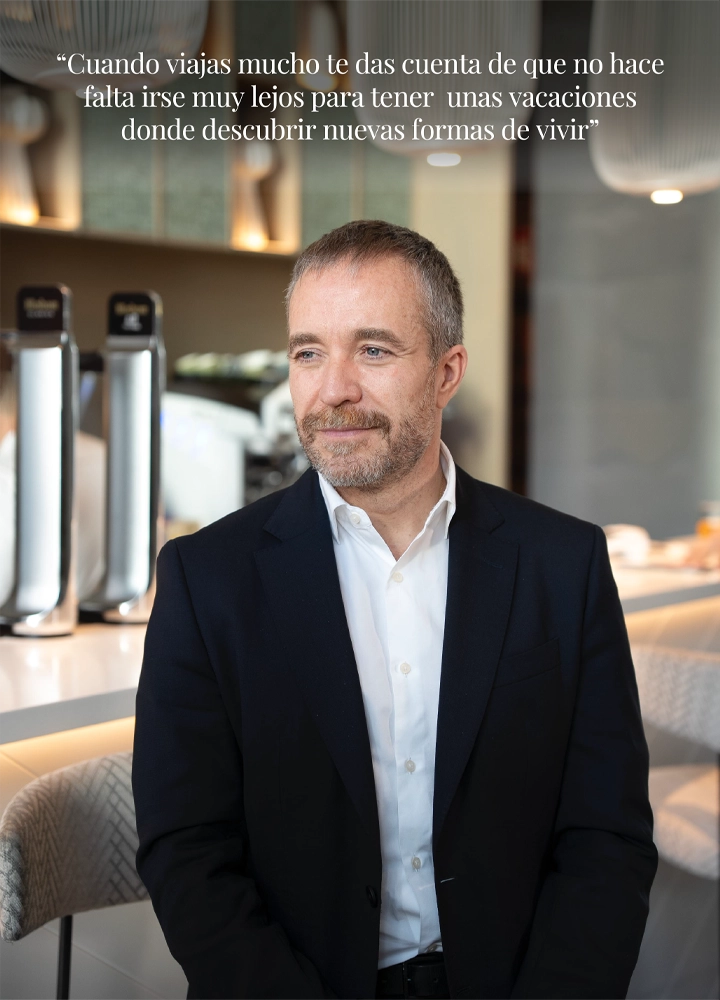
In fact, when you travel a lot, you realize that you don’t need to go very far to have a vacation where you can discover new ways of living and new cuisines, with quality service and infrastructure. Above all, I am inspired by traveling and discovering things you don’t know.
Care to name any specific destinations?
Japan really surprised me the first time I visited. And more recently, China.
And Peru is an incredible destination: very different cultures, impressive gastronomy, and highly diverse landscapes (the highlands, the Amazon rainforest, the coast). I also hold Mexico very close to my heart; it is a spectacular country.
From your international career, what did you learn that you apply to leadership today?
Transparency. In Spain, we do not belong to an administrative tradition focused on transparency, although that is changing more and more.
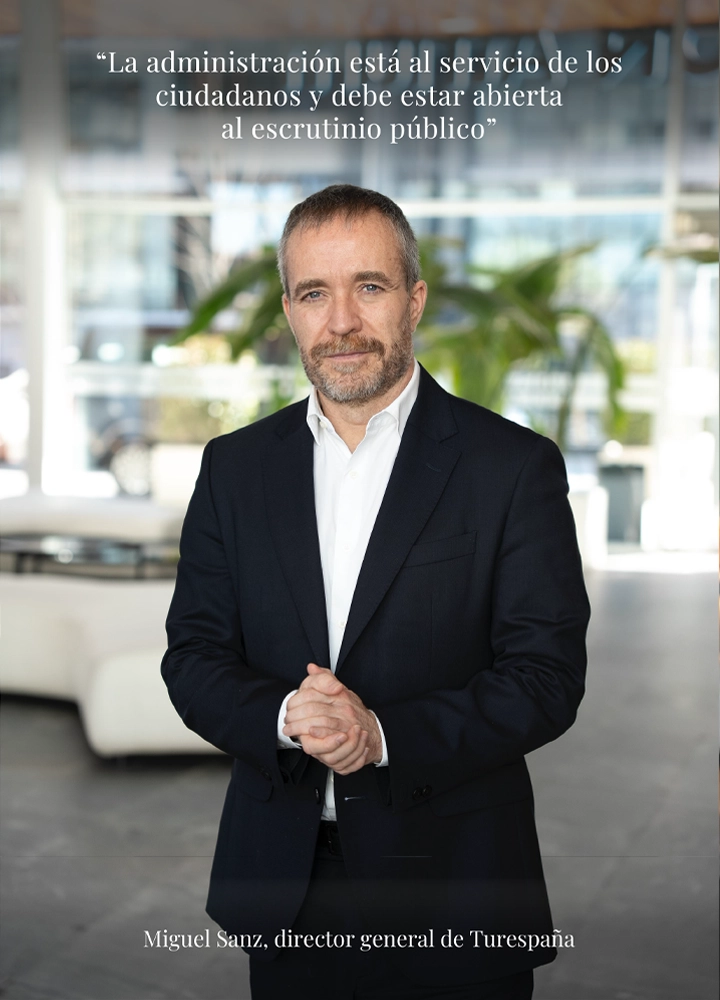
I worked at the European Commission, in Central America, and I had a Swedish boss. It left an impression on me when a citizen asked to see a contract and my instinct was “it’s not to be given.” He told me: of course, a citizen has the right to know the contracts of a public administration. That makes you understand that the administration is at the service of its citizens and must be open to public scrutiny.
I also learned the importance of building long-term relationships based on trust: with suppliers, partners, destinations, international operators, airlines, and public or private managers. And being open to diversity: working with teams in many countries forces you to understand different cultural realities, and that makes it easier to aspire for Spain to be a global destination.
This interview is for “Overcoming the Impossible.” Have you overcome any “impossibles” in your life or career?
I can’t think of any “impossibles” as such. I was lucky enough to be raised believing that there were no impossibles, that all it took was hard work. Later, one realizes that it doesn’t just depend on will and work, but without those two variables, it’s difficult to achieve anything.
When I was a kid, I didn’t play football; I asked my parents to take me to Fitur (the International Tourism Trade Fair). And I have ended up in a job that, if I had said what I wanted to be when I grew up as a child, would surely look a lot like what I do now. But I do have one thing very clear: if you don’t do it yourself, no one is going to do it for you.
To close: any book or experience that has inspired you and you would like to recommend?
A book: La península de las casas vacías (The Peninsula of Empty Houses), by David Uclés. It deals with the Spanish Civil War from a different perspective, with a touch of magical realism. It is very well written and leads you to reflect from different angles, without getting into polarization.
And an experience: an olfactory workshop. It awakened a sense that we are usually not as aware of. Discovering how smells can change moods and trigger reactions seemed like a very beautiful experience to me.
And since you know us: what would you highlight about our model (ILUNION Hotels)?
You have proven to the world that the real and effective inclusion of people with disabilities or in vulnerable situations is not only possible but desirable. Socially, of course, but from a business point of view as well, because it leverages the existing context and generates a profitable, socially responsible, and inclusive model.
I have stayed at ILUNION hotels many times and I know that the comfort is equal to or better than any chain in its category. And the service level of its professionals is equal and often better, because the workers are aware that they are part of a special project, and that is transmitted.
It is felt at the front desk, among the staff facing the public, and with the people you cross paths with throughout your stay. You feel welcomed and you feel special, and that impacts something we talk about a lot in marketing: NPS (Net Promoter Score).
In fact, I remembered a recent experience: I went to a hotel in Vienna, the Magda Hotel. It is a social project with a very high percentage of workers at risk of exclusion. Furthermore, the hotel was created in collaboration with the city and the neighborhood: much of the furniture was reclaimed and refurbished, donated by neighbors and given value through industrial design. There were community workshops, like one for macramé lampshades. The art collection came from a project at the University of Fine Arts Vienna.
When I arrived, I noticed it: “this place has something.” There was a special vibe; it had managed to create a community in the neighborhood and change perceptions. And I believe that in ILUNION hotels the same thing happens: you arrive and say, “there is something different here.”