ILUNION Hotels reveals the trends that will shape tourism in 2026-2027
Technology, climate, and digital trust will shape the future of the sector, according to the ILUNION Hotels Trends Report presented at FITUR 2026
January 22, 2026
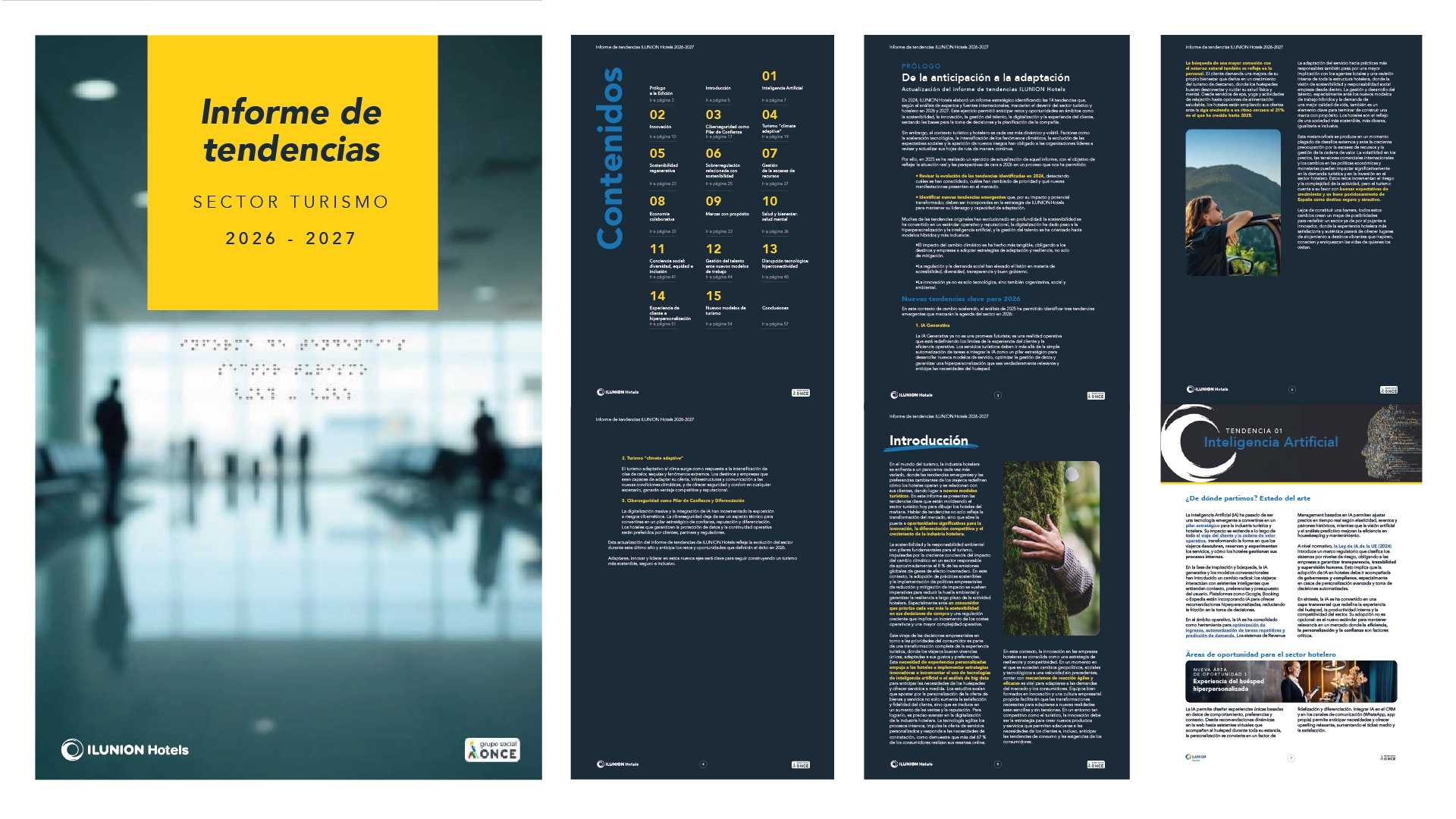
Within the framework of FITUR 2026, ILUNION Hotels presents the second edition of the Tourism and Hotel Sector Trends Report, a strategic analysis exercise that reviews the evolution of the main trends identified in 2024, expands its scope, and adds three new emerging keys that are already shaping the present of the sector and will define strategies for the 2024–2027 period.
In a context of profound tourism transformation, the evolution of the sector and traveler preferences are playing an increasingly decisive role, influencing both the travel experience and the way hotels design and manage their services. This scenario is giving rise to new guest-centered tourism models, in which factors such as technological acceleration, the impact of climate change, and growing concern for digital security are redefining not only the way of traveling but also expectations surrounding the hotel stay.
Carlos Bello, Director of Innovation at ILUNION Hotels, stated that “these trends are the result of continuous analysis of the sector, which allows us to identify dynamics with real impact and strengthen our capacity for adaptation in an increasingly changing environment.”


From efficiency to experience: Artificial Intelligence as an ally
The first of the three new trends detected in the report is the consolidation of artificial intelligence as a strategic pillar for the tourism and hotel industry. The growing demand for personalized proposals is leading hotels to strengthen the use of new technologies to adjust to the needs of guests.
In this way, AI is no longer understood solely as an automation tool but has become an ally at the service of the customer experience, allowing for the anticipation of needs, optimization of processes, and reinforcement of the relationship with the traveler.
In this context, innovation can no longer be understood only from a technological or automation perspective, but also from organizational, social, and environmental ones. Hotel chains must integrate this into their strategy to drive new service models, improve personalization, optimize operational efficiency, and move toward a responsible and trustworthy use of technology—determining factors for maintaining relevance and competitiveness.
Climate seasonality
The second identified trend is the shift toward a climate-adaptive tourism model, responding to the increasingly evident impact of climate change. The intensification of heatwaves, prolonged droughts, and the higher frequency of extreme phenomena are leading tourism activities to incorporate adaptation and resilience criteria into their planning and management. In a sector particularly sensitive to weather conditions, and responsible for nearly 8% of global emissions, ensuring customer comfort, safety, and well-being in increasingly demanding scenarios becomes an essential element of the tourism value proposition.
Furthermore, the rise of a more conscious consumer who values sustainability and environmental responsibility in their purchasing decisions, coupled with a more demanding regulatory environment, forces hotel chains to anticipate and adapt their offerings to solidify a competitive and reputational advantage.
Cybersecurity: trust as part of the hotel experience
The final major trend identified is the consolidation of cybersecurity as a differentiation strategy for the sector, as well as the increasingly relevant role of digital security in brand positioning, trust, and reputation.
In an increasingly digitalized environment, the protection of personal data and operational continuity become part of the hotel experience, providing peace of mind both before and during the stay.
The evolution of cybersecurity toward a more transversal approach has a direct impact on operational resilience, customer experience, and the well-being of teams. This shift reflects how digital security is ceasing to be an isolated field and is becoming fully integrated into the management and value proposition of the hotel sector.
The sector’s evolution toward a more resilient and human tourism
The trends identified in the first edition of the report already reflected the progressive transformation of the sector toward models more focused on experience, sustainability, and responsible innovation.
This evolution, together with the new keys incorporated in the update, outlines a hospitality model that is better prepared for current challenges, in which technology, environmental adaptation, and digital trust are integrated at the service of a more human, secure, and relevant experience for people.