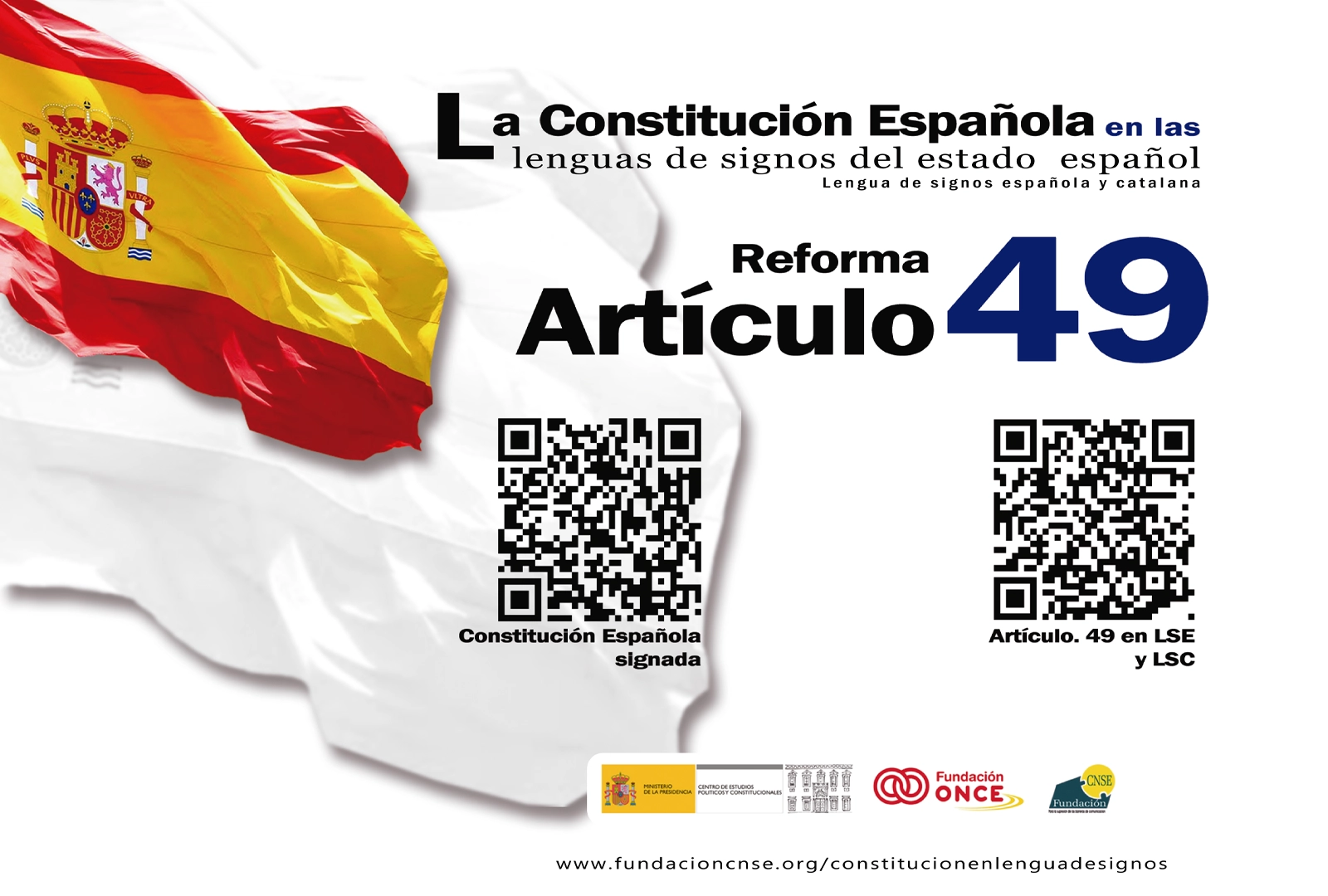
The Reform of Article 49 of the Spanish Constitution
A Step Forward in the Protection of the Rights of Persons with Disabilities
June 25, 2024
Article 49 of the Spanish Constitution, which refers to the rights of people with disabilities, has undergone a reform aimed at aligning it with the principles of the United Nations Convention on the Rights of Persons with Disabilities, ratified by Spain in 2008. The reform, unanimously approved by all parliamentary groups in both the Congress of Deputies and the Senate, follows more than six years of advocacy from the disability rights movement, and represents a paradigm shift in recognizing the dignity, autonomy, and participation of people with disabilities in society.
Content of the reform
Previously, Article 49 of the Spanish Constitution read:
“Public authorities shall pursue a policy of prevention, treatment, rehabilitation, and integration of physically, sensorially, and mentally impaired persons, to whom they shall provide specialized care and special protection for the enjoyment of the rights granted by this Title to all citizens.”
The reform of Article 49 involves changes to both its title and text. The title is changed from “Of the physically, sensorially, and mentally impaired” to “Of people with disabilities.”
The goal of this reform is to align with the Convention on the Rights of Persons with Disabilities (ratified by Spain in 2008), ensure the rights of people with disabilities, and eliminate any derogatory or discriminatory language used in the original text.
The reform was unanimously passed by the Congress of Deputies on February 15, 2024, and was published in the Official State Gazette (BOE) on February 17, 2024. This reform represents a historic step forward in recognizing the dignity, autonomy, and full participation of people with disabilities in society.
Some of the main benefits of the reform include:
- The term “impaired” is replaced with “people with disabilities”, reflecting a paradigm shift from the medical model to the social model of disability. This recognizes that social and environmental barriers—not individual conditions—limit participation.
- The reference to the legal capacity of people with disabilities is removed, and the article now establishes their right to act on equal terms with others, respecting their will and preferences. This guarantees the right to self-determination and prevents discrimination.
- The principle of universal accessibility is introduced as a requirement for the effective exercise of fundamental rights. This means eliminating physical, sensory, cognitive, communicative, digital, and other barriers that hinder access to public and private goods and services.
- It explicitly recognizes the right to inclusive education, independent living, and community inclusion for people with disabilities. It also calls for the necessary support systems to ensure they can fully develop their life projects on equal terms.
Implications of the Reform
The reform of Article 49 is a significant step in the protection of the rights of people with disabilities, recognizing them as full rights holders, not merely recipients of care or assistance. Furthermore, it eliminates the term “impaired,” which has a pejorative and stigmatizing connotation, and replaces it with “people with disabilities,” which respects functional diversity and individual identity.
The reform also incorporates key principles from the Convention on the Rights of Persons with Disabilities, such as dignity, autonomy, legal capacity, equality, non-discrimination, accessibility, participation, and inclusion. These principles will guide public authorities and society at large to ensure the full enjoyment of rights for people with disabilities.
This reform was made possible with the support and advocacy of various organizations from the third sector and the ONCE Social Group, which led a public awareness and mobilization campaign called “Cermi, for an Inclusive Constitution.” The campaign involved collecting signatures, promoting messages on social media, organizing public events, and presenting legislative proposals.
The petition to amend Article 49 was launched by CERMI in 2017 and succeeded in gathering more than one million signatures from citizens, along with the support of figures from the political, cultural, sports, and social spheres. CERMI is the platform representing, defending, and advocating for Spanish citizens with disabilities, bringing together nearly 8,000 associations and organizations.
Despite the reform of Article 49, many challenges still remain in achieving full inclusion of people with disabilities in Spanish society. Some of these challenges include improving quality of life and well-being for people with disabilities and their families; ensuring access to education, employment, healthcare, culture, leisure, and social services; promoting universal accessibility and inclusive design; encouraging civic and political participation; combating stigma and discrimination; and guaranteeing the effective enforcement of the rights recognized in the Constitution and the International Convention.