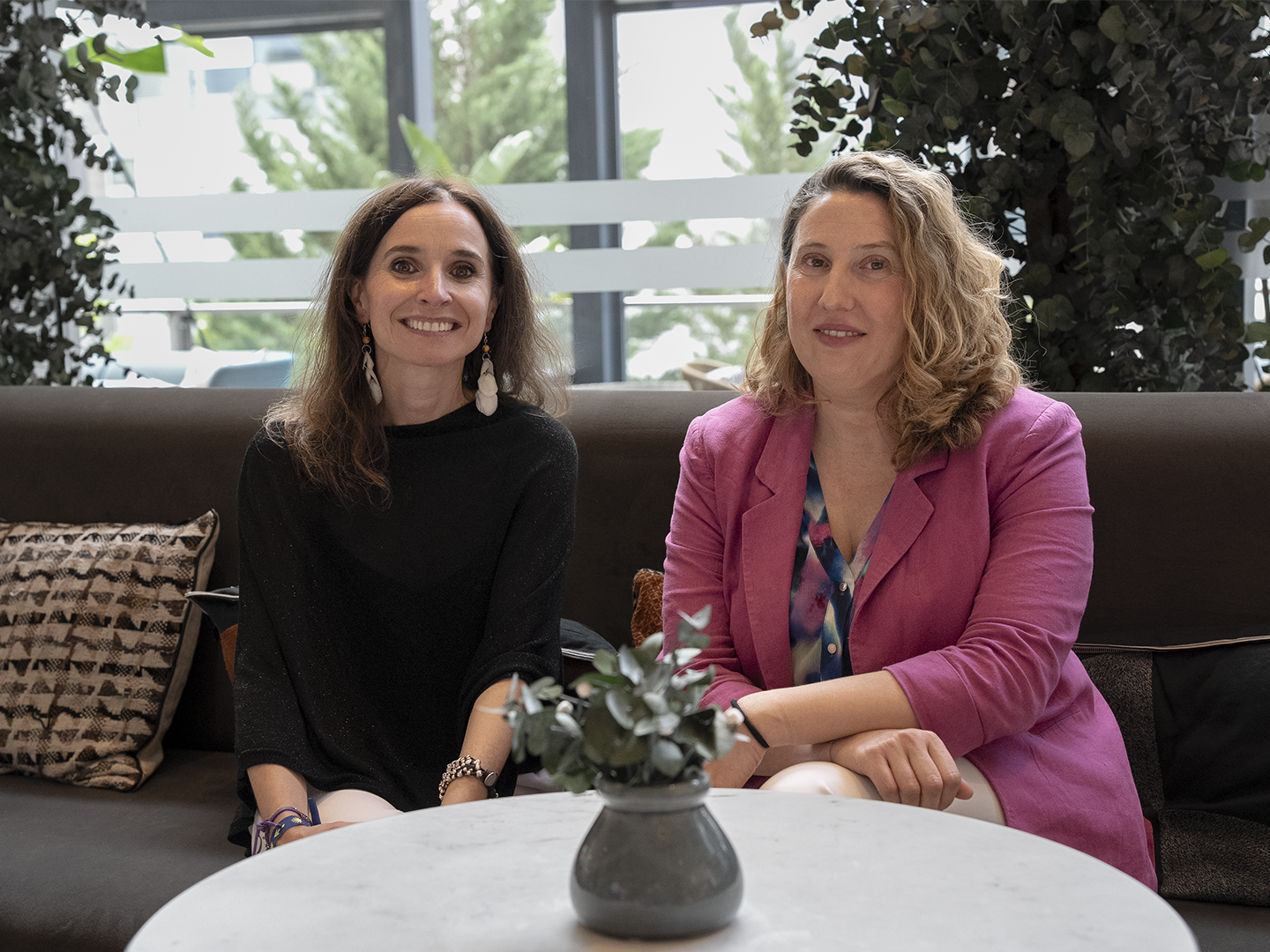
A coffee with: Cristina Sánchez
Cristina Sánchez, Executive Director of the UN Global Compact Spain
Interview with Cristina Sánchez, by Teresa Zamora.
July 02, 2026
At a time when companies are called upon to go beyond the bottom line to become real agents of transformation, sustainability ceases to be an option and becomes a shared responsibility. In this new global conversation, the United Nations Global Compact plays a key role as a compass guiding organizations toward a positive impact.
Today, in A coffee with…, we talk with Cristina Sánchez, Executive Director of the UN Global Compact in Spain, one of the most authoritative voices for understanding how businesses can—and must—lead the change toward a more sustainable, fair, and inclusive future.
In a few words, what motivated you to dedicate yourself to sustainability?
The values that sustainability represents. Not only the environmental side, to which I have always been very sensitive, but also and above all, the social side, which deeply moves me.
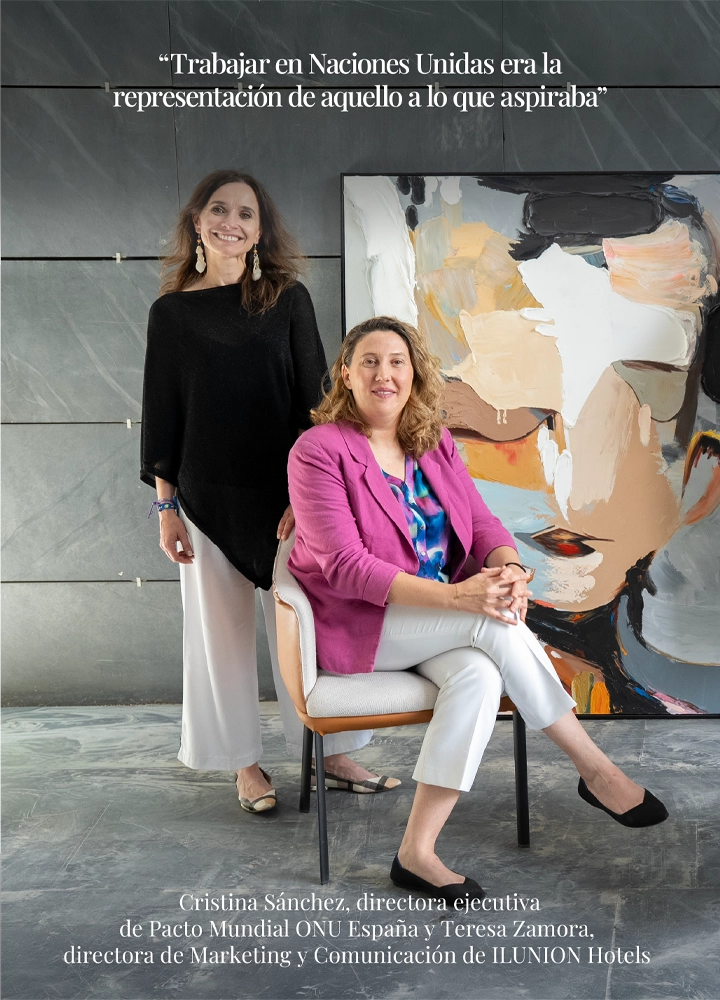
I studied International Relations, and working at the United Nations was like a dream; it was the representation of what I aspired to, both professionally and personally.
In the end, step by step, I built my career, and now I am lucky enough to direct an initiative that I love. I feel very fortunate.
What do you believe in more: society’s capacity for transformation or the resistance we encounter along the way?
By nature, I am an optimist, so I clearly believe in the transformation of society. When we look at things with a long-term perspective and look back, we see that, generally speaking, society has evolved for the better.
It is true that in the world of corporate sustainability we are experiencing ups and downs, heavily affected by the geopolitical situation—for instance, the arrival of the Trump administration or conflicts like the war in Ukraine or the Middle East, in addition to the pandemic, which did not happen that long ago.
All these situations put at risk where we place our focus and our energy, both in business and on a personal level.
I believe that resilient people and organizations are those that look at the long term and do not let themselves be distracted by these narratives or geopolitical movements.
In any case, the data supports this optimism. In fact, at the Global Compact, we have continued to grow in recent years. And we know that 80% of European citizens incorporate sustainability into their consumption habits, although there is still work to do, because out of those, only 27% say they always do so.
The conclusion is that there is sensitivity, but that commitment still needs to develop and evolve.
For those who may not be familiar, what is the UN Global Compact?
The UN Global Compact is the world’s largest sustainability initiative. It was created in the year 2000 by the then Secretary-General Kofi Annan, with the aim of giving business a more human face.
Our mission is to help and guide companies in incorporating sustainability into their business strategies, because the United Nations considers the business sector to be a fundamental actor in advancing the protection of the planet and the development of people.
We work from a headquarters in New York and through local networks. There are about 70 networks worldwide and around 25,000 participating companies, with close to 2,000 here in Spain.
Our work consists of providing guidance through training, tools, and knowledge in areas such as human rights, labor standards, the environment, and anti-corruption, adapting to the needs of each type of company. We have to segment a great deal, because what a large hotel chain needs is not the same as what an SME in the agricultural sector requires, for example. For us, active listening is key to identifying what each company needs so we can then support them on that journey.
And bringing it to the tourism sector, where do you see that the industry is still falling short?
Tourism, broadly speaking, is fundamental to the Spanish economy and, precisely for that reason, it has significant impacts.
At the Global Compact, we have created various working groups to understand the risks and opportunities of the sector, as well as to identify the main barriers in terms of sustainability.
In one of these groups back in 2023, we identified several major challenges. In the environmental sphere, besides decarbonization—which is common to all sectors—issues such as water management, impact on the coastlines, the circular economy, food waste, and the protection of biodiversity stand out.
In the social sphere, since this is a sector that represents more than 12% of the GDP and generates a lot of employment, diversity, inclusion, and the guarantee of decent work are key.
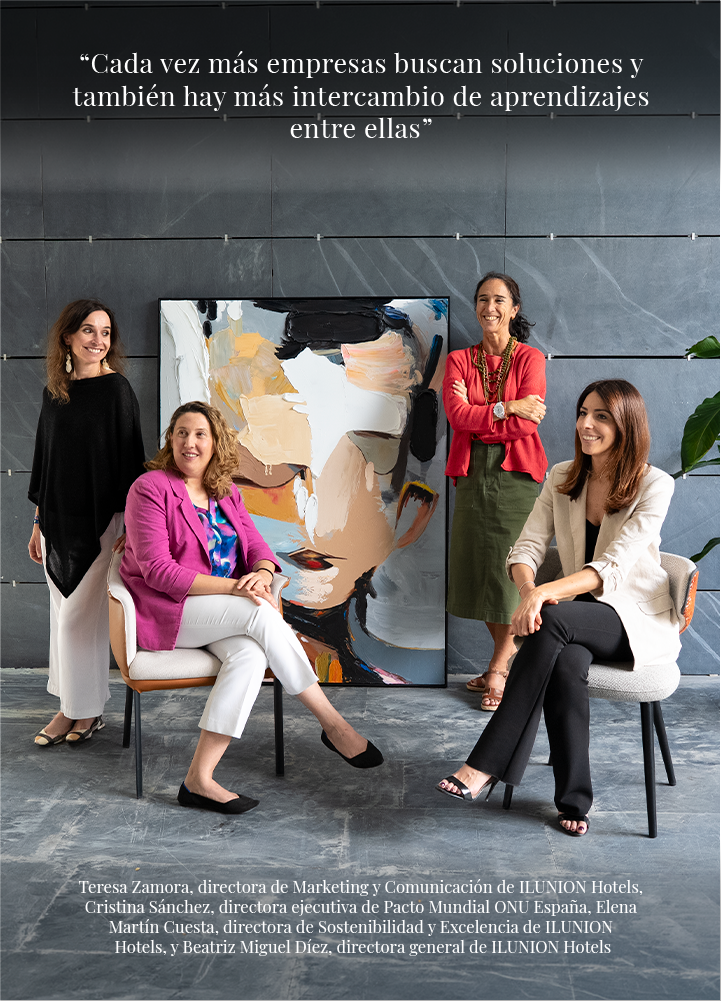
Even so, the sector is moving forward. We have seen an interesting evolution in recent years: more and more companies are looking for solutions, and there is also a greater exchange of learnings among them.
What role should the sector play in this transition?
That is an interesting question. I believe that priorities and urgency must be set by each individual company, first by analyzing where their risks lie, because sustainability is ultimately a form of risk management. It used to be understood primarily as philanthropy—the part least connected to the core business. In recent years, due to multiple factors, it has become truly strategic.
We have seen this evolution across all sectors, driven by legislative pressure, investor interest, consumer demands… The very transformation of society has made sustainability a key factor for both risk management and competitiveness.
That is precisely what we observe at the Global Compact: a mature approach to sustainability requires knowing your company well, identifying its impacts, and prioritizing them from there. That is exactly where we want to help. A hotel company, for example, does not face the same risks on the coast as it does inland, or in one country versus another, and it is that deep understanding of the business that allows each company to prioritize its risks and boost its positive impact.
In the case of tourism in Spain, I believe we are starting with an advantage. Spain is recognized as one of the leading countries in tourism management, and that is an opportunity to differentiate ourselves as a quality, sustainable destination. That is where our competitive edge lies compared to other destinations: it is not about sustainable tourism for its own sake, but tourism built on sustainable management. With all the experience we have in the sector, Spain is incredibly well-positioned to stand out by caring for people and protecting the environment. For me, without a doubt, it is a massive opportunity.
We are already getting close to 2030, what worries you the most?
We are worried about the pace. Only 18% of the Sustainable Development Goals (SDGs) targets are progressing at the right speed. It is not so much a step backward as it is a slowdown, influenced by the pandemic, conflicts, and political polarization.
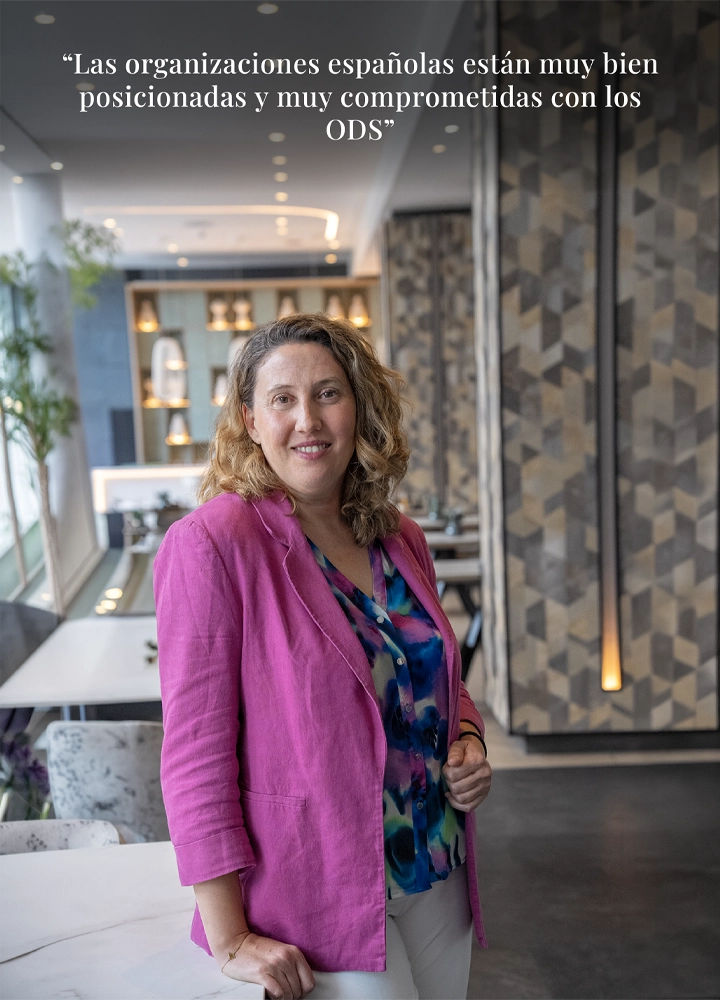
Even so, there is also major progress globally—for instance, in education, healthcare, and gender equality. Furthermore, in Spain, the business community has demonstrated a very significant commitment, and we can proudly say that organizations in Spain are very well-positioned and deeply committed to the SDGs.
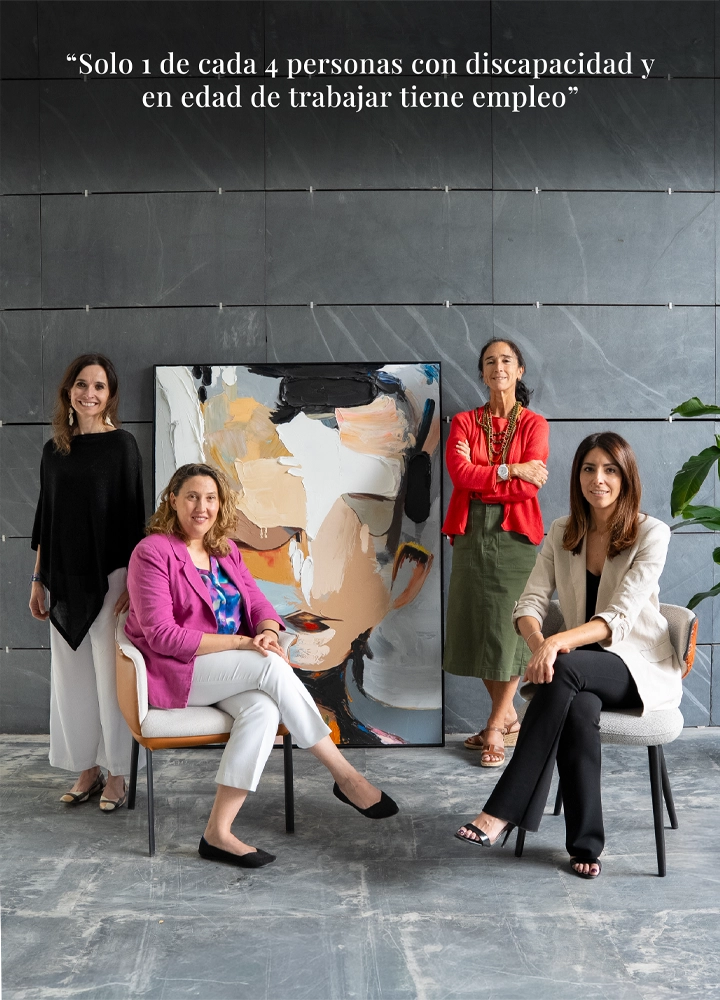
Do you think companies truly understand what inclusion means?
Not entirely yet. The data indicates that there is a significant gap between legal compliance and the adoption of a strategic inclusion model like the one ILUNION Hotels has. In fact, over the last two years, we have worked with the ONCE Foundation on a toolkit, “How to integrate disability into corporate strategy,” and although we have seen progress, we are still far from having businesses that are truly inclusive regarding disability.
The figures reflect this: in Spain, 10% of the population has some type of disability, but only one in four people with disabilities of working age is employed. There is an obvious gap there.
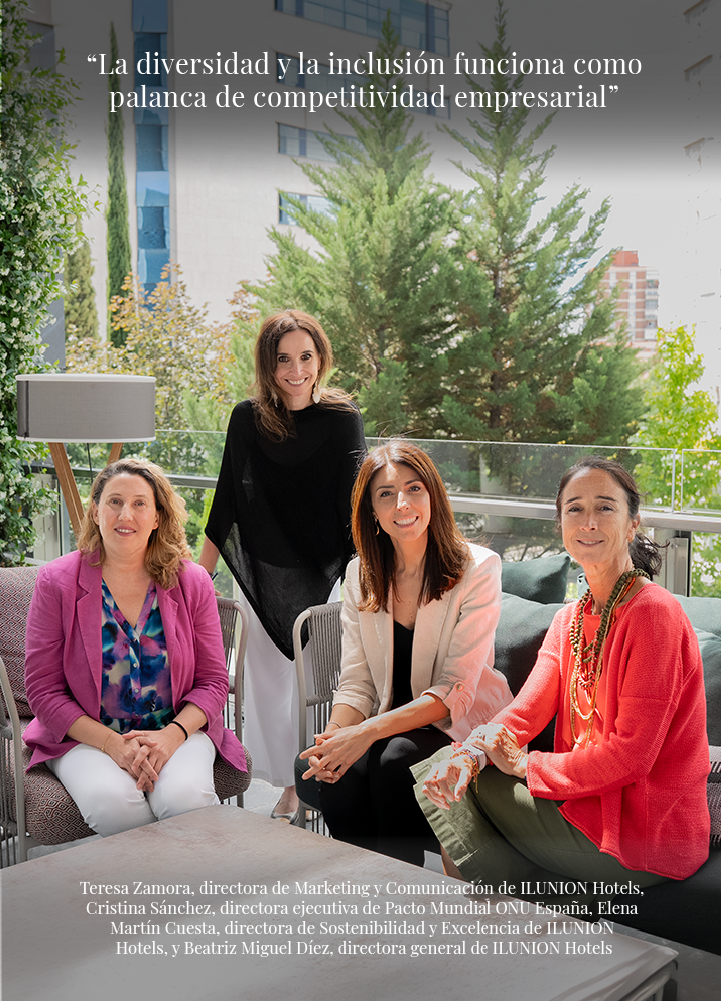
At the Global Compact, we understand that we need to help companies see the highly positive return of having diverse workforces and, specifically, employees with disabilities. In that sense, we find the case of ILUNION Hotels particularly interesting to share, because inclusion is integrated right into its core, into the organization’s strategy, and that does not stop it from being one of the most competitive companies in its sector.
According to our data, large companies are leading the way in inclusion. 70% already implement measures, while in SMEs and micro-enterprises, the figure drops to 29%. In the former, legislative pressure, the size of the workforces, the available budget, and the capacity to generate a corporate culture with solid internal policies all play a role. In smaller companies, on the other hand, meeting those objectives proves more difficult. Our purpose is to support companies in this transition toward more inclusive models, both internally and toward customers.
The truth is that inclusion is also a business opportunity. If 10% of the population has some type of disability, those people also want to go on vacation and enjoy leisure time. The interesting thing about ILUNION Hotels’ vision is that it does not target only people with disabilities, but rather intelligently expands its potential customer base. They are not hotels for people with disabilities: they are hotels for everyone. But that percentage of the population that has a disability will naturally prefer an accessible hotel.
It is a perspective that we still do not see as widespread as we would like, and not just in the hotel sector. Purely as a business matter, opening up to other audiences makes sense. It is a clear example of how this vision of sustainability—in this case, social sustainability—generates greater competitiveness. Because not only is it possible, it is profitable.
Is ILUNION Hotels a good example of sustainability?
Every company has challenges, and ILUNION Hotels does too, of course. But the truth is that diversity and inclusion are built right into the company’s foundations, and that makes its business model a benchmark in the tourism sector.
In fact, when we speak with other companies in the industry, they undoubtedly see you as a reference. It is a prime example of how sustainability and human rights—which is where we at the Global Compact encompass everything related to diversity and inclusion—act as a lever for business competitiveness. And you have proven it.
Furthermore, ILUNION is a very collaborative and active company: we develop a great deal of projects together with the Global Compact. That being said, you still have challenges ahead, which are inherent to the sector. Perhaps the biggest one is environmental: decarbonization, biodiversity, and, as we mentioned earlier, water and energy management, or food waste. These are challenges intrinsic to tourism that you are already working on and where, step by step, progress is being made in a very interesting way.
If you could leave one idea in the minds of those listening to us, what would it be?
There are so many, but if I have to choose just one, especially in this context of uncertainty, I would choose this: sustainability brings competitiveness and benefits for everyone. I believe that is the message we need to repeat to ourselves and keep working toward.
What would you say to your self from a few years ago?
I would tell myself that I made the right choice with the career path I chose, that sustainability is something interesting and strategic, and that it has reached a very significant technical level; and I would tell myself to never stop learning and to enjoy the journey.
Did you have any moments of doubt?
I started working in sustainability right around the 2008 crisis, back when it wasn’t even called that—it was called Corporate Social Responsibility, and everything was very nascent. There was no data, there were no major examples of successful companies with a business model based on sustainability, and there was no legislation either. With the economic crisis, the question was always: “Is this going to disappear within companies or not?” But here we are, and we haven’t stopped growing.
I have never had major doubts about the future of sustainability, though there have certainly been times that were tougher than others. Right now, moreover, being a United Nations initiative, we are experiencing a delicate period: the UN is going through a significant crisis, especially financially, due to funding cuts from the United States, one of its largest donors. In fact, the consequences are already being felt in development aid, particularly in healthcare, such as vaccination campaigns in Africa.
Is there an “impossible” that you would like to tear down?
I would like people to stop questioning sustainability—to stop asking me if this is going to go away. I wish we could finally move on to another phase of the conversation. Sustainability departments are an integral part of the structure of large corporations, and for me, that debate is already over.